Inquiry
Leave Your Message
0%

In today’s highly competitive manufacturing world, Cnc Milling really does stand out as a game-changer for buyers around the globe. This cutting-edge process allows for the precise and efficient creation of complex parts. It’s powered by computer-controlled tools, which means better accuracy and way less human error—something that seriously boosts product quality and consistency.

What’s pretty cool is how versatile Cnc Milling is. You’ll find it working across all sorts of industries, from aerospace to automotive. Companies like Precision Machining and TechMill Solutions are using this tech to meet a wide range of client needs. That said, it’s also worth mentioning that there are some hurdles, like the upfront costs and the learning curve involved when adopting new technology.

Getting a good handle on these factors is key before jumping in. The future of manufacturing really depends on strategies like Cnc Milling. As global buyers continue to navigate this ever-changing landscape, being aware of both the perks and the challenges helps them make smarter decisions and get the most out of their investments.
Top 10 Benefits of Cnc Milling for Global Buyers?

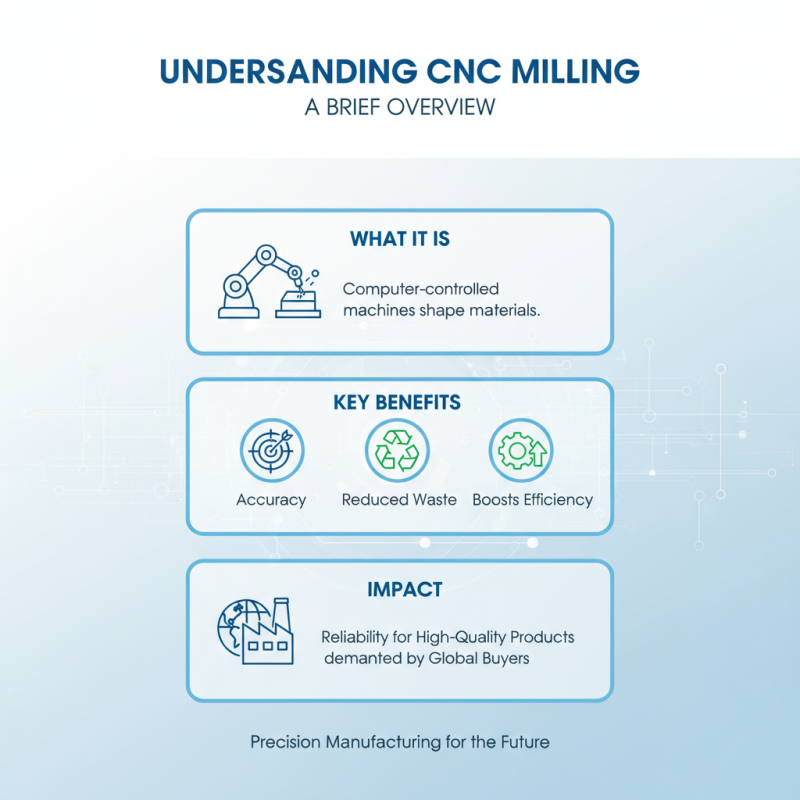
Understanding CNC Milling: A Brief Overview

Top 10 Benefits of Cnc Milling for Global Buyers?

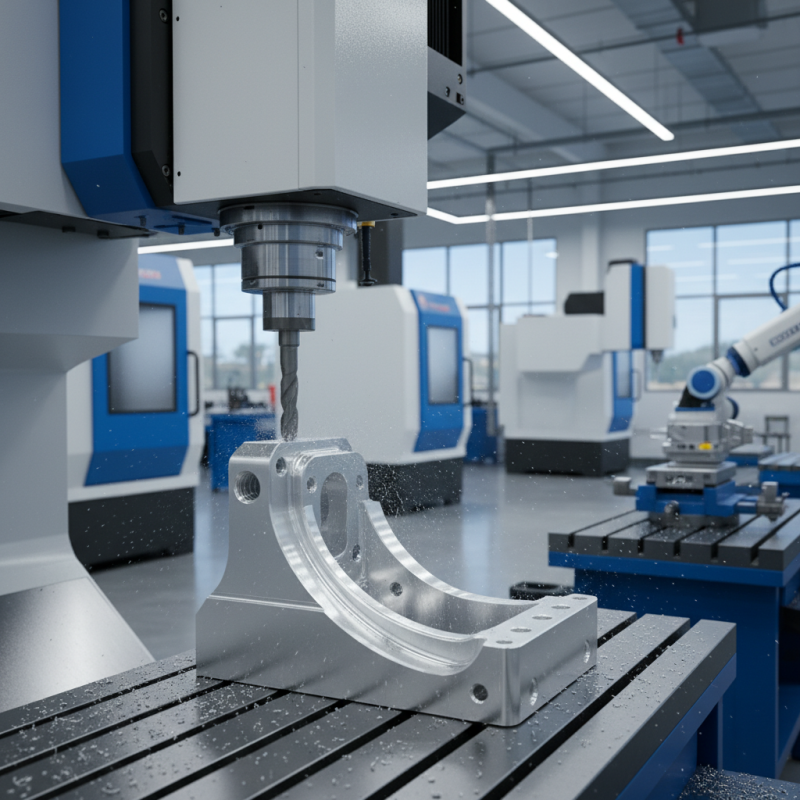
CNC milling is a precision machining process crucial in today's manufacturing landscape. This technique uses computer-controlled machines to shape materials into desired forms. With automation, CNC milling enhances accuracy, reduces waste, and boosts efficiency. This reliability makes it popular among global buyers seeking high-quality products.

Tips: When choosing CNC milling services, evaluate the machine's capabilities and the operator's expertise. Knowledgeable operators can impact the quality of Cnc Milling Parts significantly.

The versatility of CNC milling allows it to work with various materials, including metals and plastics. Precision is achieved through detailed programming, which translates designs into tangible products. However, complexity in parts may lead to higher costs or longer production times. Buyers should weigh these factors carefully.

Tips: Always have clear specifications ready. This approach minimizes errors and ensures that the final CNC milling parts meet your requirements. Additionally, ask for samples to validate quality before making large orders.

Precision and Accuracy: Key Advantages of CNC Milling

CNC milling is renowned for its precision and accuracy. This technology shapes materials with tolerances that can reach ±0.001 inches. Such accuracy is critical for various industries, from aerospace to medical devices. A study by the Manufacturing Technology Association reported that CNC milling can reduce the error margin in production by up to 40%. This level of precision allows for tighter fitting of Milling Parts, essential for high-performance applications.

In addition to precision, CNC milling offers repeatability. Once a design is programmed, it can be reproduced with identical specifications. This ensures that every piece maintains the same high standards of quality. For global buyers, this consistency can lead to significant cost savings. A recent report highlighted that companies utilizing CNC technology have seen a 15% decrease in material waste due to precise machining.

Tips: Always validate the machining capabilities of your service providers. Research their past work to assess their precision standards. It's vital to understand that not all CNC machines are created equal. Also, factors like maintenance can affect accuracy over time. Monitoring these details will ensure your Milling Parts meet necessary requirements.

Cost Efficiency: How CNC Milling Reduces Manufacturing Expenses

CNC milling has become a vital process in modern manufacturing. One of its key advantages is cost efficiency. By automating the machining process, CNC milling minimizes human error and reduces material waste. This leads to significant savings in production costs. Additionally, CNC machines can operate continuously, maximizing output while lowering per-unit costs.

Another aspect is precision. CNC milling offers remarkable accuracy. This precision ensures that parts fit together seamlessly, reducing the need for rework. Rework can be a costly and time-consuming process. Moreover, the adaptability of CNC milling allows for rapid changes in design without extensive downtime, saving both time and resources.

However, it's essential to reflect on the initial investment. CNC machines can be expensive. Companies may struggle with the upfront costs. Yet, over time, the savings on labor and materials typically outweigh these initial expenses. Some organizations may not fully capitalize on the machine’s capabilities, which can limit their benefits. Therefore, training and strategic planning are crucial to maximize efficiency and achieve desired outcomes.

Cost Efficiency in CNC Milling

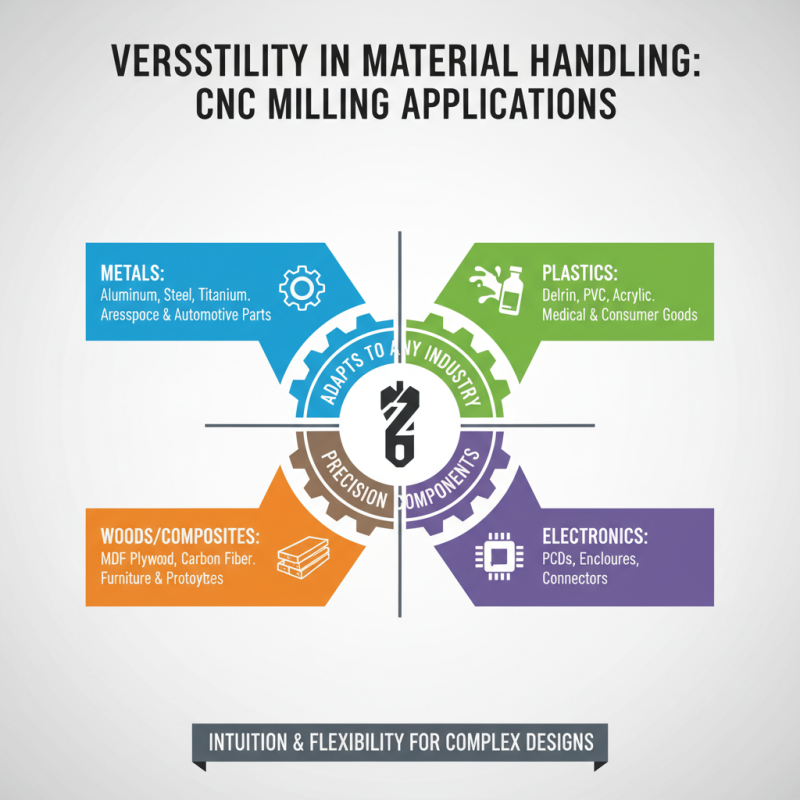
Versatility in Material Handling: Applications of CNC Milling

Top 10 Benefits of Cnc Milling for Global Buyers?

CNC milling showcases remarkable versatility in material handling. It adapts to various industries and project requirements. From metals to plastics, CNC machines can efficiently process different materials. This flexibility allows manufacturers to create intricate designs and components that meet strict specifications.

Tips: Consider the material's properties before choosing CNC milling. Harder materials may require slower speeds, while softer ones can be processed faster. Always choose the right tool for each job to enhance efficiency.

Another advantage is the capability to produce complex geometries. Manufacturers can create parts with tight tolerances, which are crucial in industries like aerospace and automotive. Yet, achieving these results can be challenging. Machinery settings must be tailored carefully to prevent imperfections.

Tips: Regularly check tooling and equipment alignment. Small misalignments can lead to significant errors over time. Document your processes and adjustments to improve efficiency.

The diversity in applications makes CNC milling a go-to process. Industries like medical and consumer goods benefit greatly from this technology. However, it's essential to remain aware of the potential limitations of CNC milling. Not every material may be suitable for every project, which requires careful assessment.

Enhanced Production Speed: Time-Saving Benefits of CNC Milling

CNC milling offers enhanced production speed that appeals to global buyers. The technology allows for rapid machining of parts without sacrificing precision. This means manufacturers can produce components much faster than traditional methods. With CNC milling, workpieces can be efficiently shaped in hours instead of days.

It's essential to optimize your CNC milling setup for the best results. For instance, maintaining sharp tools improves efficiency and reduces waste. An often-overlooked factor is the machine's programming. A small adjustment in the CNC code can dramatically speed up production cycles.

Buyers should consider investing time in operator training. Well-trained personnel can troubleshoot issues quickly, minimizing downtime. Even minor errors can lead to delays; thus, perfecting each step is crucial. Embracing a mindset of continual improvement can yield better performance and productivity in Precision Milling processes.

Consistency and Quality Control: Ensuring Superior Outputs

CNC milling technology plays a crucial role in ensuring consistency and quality control for global buyers. This method processes materials with precision, enhancing product reliability. According to a report by Grand View Research, the CNC machining market is projected to reach $100 billion by 2025. Such growth underscores its importance in achieving superior outputs.

Consistency is paramount in manufacturing. CNC milling machines operate under strict parameters, ensuring that every component matches the specified design. This technology minimizes human error in production. For instance, parts produced through CNC milling show a variance of less than 0.01 mm in dimensions, which is critical for industries such as aerospace and medical. However, achieving such precision requires regular machine calibration and skilled operators to monitor processes.

Quality control not only hinges on machine performance but also on material selection. High-quality raw materials paired with CNC technology yield robust products. Reports suggest that companies that invest in advanced CNC systems see a 30% decrease in rework and scrap rates. Nonetheless, this does not guarantee perfection. Companies must be vigilant about maintenance and periodic upgrades to stay competitive. Regular assessments of both technology and techniques are essential in maintaining high-quality outputs.

Scalability: Meeting Global Demand Through CNC Milling Solutions

CNC milling is transforming the manufacturing landscape globally. Scalability is a key feature that attracts buyers. According to a recent industry report, the global CNC machining market is projected to reach $100 billion by 2026, growing steadily each year. This growth underlines the increasing need for flexible production methods.

The beauty of CNC milling lies in its ability to adjust production volume swiftly. Manufacturers can easily scale operations without extensive downtime. For instance, a study indicates that companies using CNC milling can reduce lead times by up to 50%. This flexibility allows businesses to respond to market changes quickly. Companies often struggle with balancing production. CNC milling can alleviate these challenges by optimizing processes.

However, reliance on CNC technology does present questions. Machine failures can disrupt production schedules. Skilled operators are also necessary to fully leverage these systems. While gains are significant, overdependence on CNC technology can lead to gaps if not managed appropriately. Investing in training is essential for maximizing efficiency, especially in precision tasks like Pin Cnc. Addressing these concerns early can enhance overall productivity and stability.

Top 10 Benefits of CNC Milling for Global Buyers
Benefit Description Global Demand Impact
Precision Offers high accuracy and repeatability in manufacturing. Ensures consistent quality for international markets.
Scalability Easily adjusts to varying production volumes. Meets the fluctuating demands of global customers.
Cost Efficiency Reduces waste and optimizes material usage. Competitive pricing for international procurement.
Complex Design Capability Manufactures intricate parts with ease. Supports innovation in global product designs.
Reduced Lead Times Shortens production schedules and time to market. Accelerates supply chain responsiveness worldwide.
Flexibility Allows quick adjustments in designs and specifications. Adapts to changing global market trends.
Quality Control Facilitates thorough quality checks during production. Enhances brand reputation in the global marketplace.
Technological Advancement Utilizes advanced software and machinery. Stays competitive in a tech-driven global economy.
Sustainability Minimizes energy consumption and environmental impact. Aligns with global sustainability initiatives.
Customization Enables tailored solutions for unique client needs. Addresses diverse requirements from various regions.

FAQS

: What is CNC milling known for?

: CNC milling is known for its precision and accuracy.

What tolerance levels can CNC milling achieve?

CNC milling can reach tolerances of ±0.001 inches.

How does CNC milling impact manufacturing costs?

CNC milling minimizes human error and material waste, leading to cost savings.

What can improve the accuracy of CNC milling?

Regular maintenance of CNC machines can improve accuracy over time.

How does CNC milling contribute to waste reduction?

CNC milling reduces material waste by up to 15% due to precise machining.

What should companies consider when investing in CNC machines?

Companies should reflect on initial costs versus long-term savings on labor and materials.

Can CNC machines adapt to design changes easily?

Yes, CNC milling allows for rapid design changes without extensive downtime.

Why is training important for CNC machine usage?

Training helps companies maximize machine capabilities and achieve better outcomes.

What are the risks of inadequate planning in CNC milling?

Poor planning can limit the benefits and efficiency of CNC operations.

What is a common challenge with CNC machine investments?

The initial high cost can be a barrier for some organizations.

Conclusion

CNC milling has emerged as a pivotal technology for global buyers, offering a myriad of benefits that enhance manufacturing processes. One of the primary advantages is its precision and accuracy, allowing for the production of complex parts with exceptional detail. This technology also significantly reduces manufacturing expenses, making it a cost-effective solution for businesses of all sizes.

Additionally, CNC milling's versatility in handling various materials caters to diverse industries. The time-saving benefits boost production speed, ensuring that businesses can meet tight deadlines without compromising quality. Consistency and quality control are further enhanced through automated processes, leading to superior outputs. Finally, the scalability of CNC milling solutions enables companies to adapt to growing global demand seamlessly, making it a strategic choice for modern manufacturing.


Sophia

Sophia

Sophia is a dedicated and professional marketer with a deep commitment to delivering high-quality products that not only satisfy our customers but also enhance their own offerings to their clientele. With a strong background in product design, development, and manufacturing, Sophia excels at......
Previous Why Choosing a High-Quality Custom CNC Mechanical Parts Factory Matters?