Leave Your Message
When you're trying to pick a Chinese Precision Milling manufacturer, it’s definitely more than just about comparing prices. The choice you make can impact how accurate your parts are, how steady the production runs, how reliable the delivery is, and ultimately, your reputation with your clients.
Now, let’s clear something up — Precision Milling isn’t just about slicing metal with a fancy CNC machine. It involves a bunch of things like choosing the right tools, designing proper fixtures, controlling the spindle perfectly, understanding how different materials behave, inspecting parts thoroughly, and making judgment calls on the spot. If a supplier claims they can hold super tight tolerances, don’t just take their word for it — ask for evidence.
Yusuf Altintas, a renowned researcher in machining, once said, “You gotta understand the machining process before you try to optimize it.” That’s pretty much the golden rule here, especially when you’re vetting a Chinese supplier. Don’t forget to ask for sample inspection reports, machine specs, material certifications, and detailed tolerance records. Look out for hints of practicality—stuff like whether they have calibrated CMM equipment, a workshop with a controlled temperature, and documented checks for first-article runs.
A trustworthy manufacturer should be open about their process — no hiding behind glossy photos or fancy brochures. If you can, take a virtual tour of their factory, or better yet, visit in person. Pay attention to how their engineers handle test failures — sometimes, that’s more revealing than a shiny presentation.
Also, make sure they’ve got experience working with your specific materials, whether it’s aluminum, stainless steel, titanium, engineering plastics, or your particular alloy. And check if they can handle everything from prototypes and small batches to larger, repeat runs. Communication is key here too — drawings can get lost in translation, so ensure they understand your technical details clearly.
Yes, brands like 3A Precision Machining and other well-known Chinese suppliers might have strong capabilities, but no single name guarantees quality. Always verify each claim independently. Even a seemingly promising factory can stumble with poor planning or inconsistent inspections.
There isn’t a perfect checklists for this stuff. I’ve seen buyers fixate so much on unit costs that they overlook critical things like packaging, revision management, or how quickly they respond to issues. The trick is to find a supplier who balances technical skill, transparent quality systems, realistic lead times, and straightforward communication. Ultimately, quality Precision Milling depends on a supplier treating every tolerance as a responsibility you can measure and trust.
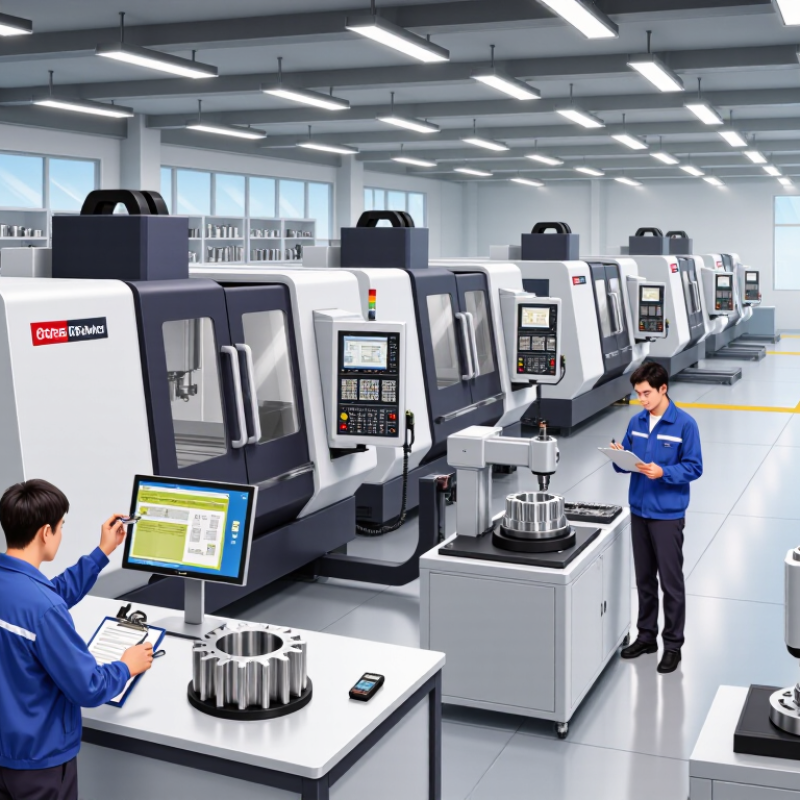
Choosing a China precision milling manufacturer starts with a clear definition of your project. Describe the material, part dimensions, tolerances, surface finish, and annual quantity. A drawing alone may not explain every functional requirement. State critical features directly.
For Precision Milling Parts, identify tolerance zones such as ±0.01 mm, flatness limits, and hole-position accuracy. Mention whether the part needs anodizing, passivation, deburring, or inspection reports. Include the actual working environment, especially temperature, vibration, moisture, or repeated loading. These details help engineers select suitable machines, cutting tools, and inspection methods.
Ask how the manufacturer verifies quality. Useful evidence includes calibrated CMM records, first-article inspection reports, material certificates, and traceable process documents. Request sample measurements from similar geometries, not only polished product photos. A factory should explain its inspection frequency and response when results fail.
Be specific.
Experience also exposes weak assumptions. In an earlier project, our drawing listed tight dimensions but ignored burr limits. The parts passed measurement checks yet caused assembly delays. That mistake changed our quality checklist. Now, we review assembly trials, gauge access, edge conditions, and packaging before approving production. Still, no checklist catches everything. A practical manufacturer should welcome technical questions and suggest realistic tolerance adjustments when they protect function without inflating cost.
| Requirement Area | Recommended Requirement to Define | Typical Precision Target | Quality Expectation | Verification Method and Evidence |
|---|---|---|---|---|
| Part Material | Specify the exact alloy or grade, temper or heat-treatment condition, material standard, and required material certification. | Examples include aluminum, stainless steel, carbon steel, brass, engineering plastics, and hardened materials; the final grade must be stated on the drawing or purchase specification. | Material must match the approved specification, including chemical composition, mechanical properties, and heat-treatment condition where applicable. | Review a material test certificate, heat-lot information, supplier traceability records, and identification markings on the incoming material. |
| Dimensional Tolerances | Separate critical dimensions from non-critical dimensions and state bilateral, unilateral, limit, or fit tolerances. | For many precision CNC milling applications, critical dimensions may be specified around ±0.01 to ±0.05 mm, subject to part size, geometry, material, and process capability. | The manufacturer should confirm achievable tolerances before production rather than relying only on general capability statements. | Check a dimensioned drawing, capability study, first-article inspection report, and measurement results from calibrated equipment. |
| Geometric Tolerancing | Define datums and specify flatness, perpendicularity, parallelism, position, concentricity, runout, or profile requirements using GD&T where needed. | Use the tolerance values shown on the engineering drawing; avoid replacing functional GD&T requirements with general linear tolerances. | Inspection must use the same datum structure and tolerance interpretation as the approved drawing, consistent with ISO 1101 or the applicable drawing standard. | Review the controlled drawing, inspection plan, datum setup, coordinate measuring machine report, and signed first-article results. |
| Surface Roughness | State the required roughness for each functional surface and identify the measurement direction, cutoff, and inspection location when important. | Common machined requirements range from approximately Ra 0.8 to 3.2 µm, while the correct value depends on sealing, sliding, fatigue, appearance, and coating needs. | Surface texture must be measured according to the drawing requirement and an applicable method such as ISO 21920-1. | Request surface-roughness readings, instrument calibration status, inspection locations, and representative production samples. |
| Part Size and Complexity | Provide maximum envelope dimensions, minimum wall thickness, deep-pocket depth, hole diameter, aspect ratios, and difficult-to-machine features. | Capability must be evaluated against the actual geometry; thin walls, deep cavities, small tools, and long overhangs can reduce accuracy and stability. | The process plan should address workholding, tool access, vibration control, distortion, and sequence of operations. | Evaluate a manufacturability review, process-flow diagram, fixture concept, tool list, and sample inspection data. |
| Machine and Process Capability | Confirm machine travel, spindle speed, tool capacity, number of axes, probing capability, thermal control, and suitability for the specified material. | For critical dimensions, request evidence such as process capability indices rather than accepting an unsupported accuracy claim. | A stable process should demonstrate consistent results under normal production conditions, with appropriate control of temperature, tooling, and workholding. | Review machine specifications, preventive-maintenance records, capability studies, setup sheets, and production trial results. |
| Inspection Equipment | Identify required equipment, measurement resolution, calibration interval, environmental controls, and operator qualification. | Use equipment suitable for the tolerance; measurement resolution should be sufficiently finer than the tolerance being evaluated. | Measurement systems should be calibrated and traceable to recognized national or international standards. | Verify calibration certificates for CMMs, micrometers, height gauges, bore gauges, surface testers, and other critical instruments. |
| Sampling and Acceptance | Define first-article inspection, in-process checks, final inspection, sample size, critical-to-quality characteristics, and nonconformance handling. | Use 100% inspection for safety-critical or fully critical characteristics when required; statistical sampling may be used for stable, non-critical features. | Acceptance criteria must be agreed before production and should not be changed after shipment. | Reference an agreed inspection plan or a recognized sampling standard such as ISO 2859-1 where appropriate. |
| Surface Treatment | Specify treatment type, coating or plating thickness, color, masking areas, corrosion resistance, and post-treatment dimensional limits. | Treatment thickness and appearance requirements must be defined by the applicable specification; coating can affect fits, threads, and critical dimensions. | Finished parts should meet appearance, adhesion, thickness, coverage, and corrosion-performance requirements where applicable. | Request treatment certificates, thickness readings, adhesion or corrosion test results, and masking inspection records. |
| Documentation and Traceability | Define the required documents, revision control, lot identification, serial or batch numbering, and retention period. | Each shipment should be linked to its material batch, work order, inspection results, process revision, and approved drawing revision. | Records should be complete, legible, controlled, and retrievable throughout the agreed retention period. | Review sample inspection reports, material certificates, process records, nonconformance reports, and document-control procedures. |
| Supplier Qualification | Evaluate technical capability, quality-system maturity, communication, capacity, risk controls, and experience with comparable tolerances and materials. | Prioritize objective evidence over general claims, including sample parts, inspection data, corrective-action records, and process capability results. | A formal quality management system aligned with ISO 9001 can support consistent control, but certification does not replace part-specific verification. | Use a supplier questionnaire, technical audit, sample approval, production trial, and documented corrective-action process before volume release. |
Practical note: Final tolerances, inspection methods, sampling levels, and acceptance criteria should always be agreed in the controlled engineering drawing, purchase specification, and quality agreement for the specific part.
China CNC machining milling parts suppliers provide a practical solution for businesses seeking reliable OEM manufacturing and flexible production support. Through advanced CNC milling equipment, experienced engineers can produce precision components from materials such as aluminum, stainless steel, brass, and engineering plastics. Parts can be manufactured according to customer drawings, 3D models, samples, and specific performance requirements, with careful attention to dimensions, surface finish, and assembly compatibility.
A professional factory typically manages the complete process, including material selection, process planning, CNC programming, machining, inspection, and packaging. Strong quality systems certified to IATF 16949 and ISO 9001 help maintain consistent standards throughout production. Skilled manufacturing teams can also review designs for manufacturability, recommend suitable tolerances, and improve machining efficiency before mass production begins.
When selecting a China OEM supplier, customers should evaluate production capabilities, inspection equipment, communication efficiency, and delivery performance. A dependable manufacturing partner should support both prototypes and large-volume orders while providing clear quotations, stable quality, and efficient turnaround times. With organized factory management and experienced technical personnel, CNC milling manufacturers can deliver customized parts for automotive, industrial equipment, electronics, medical devices, and other demanding applications.
Provide the material, dimensions, tolerances, surface finish, and yearly quantity. Note critical features clearly. A drawing may leave gaps.
Specify tolerance zones, flatness, hole positions, and burr limits. Include any finishing, inspection reports, and packaging needs.
Ask for recent inspection records, material certificates, and traceable process documents. Request measurements from parts with similar shapes.
No. Treat certification as a screening signal. Confirm machine capability, inspection methods, and results from relevant parts.
Ask about machine configurations, coordinate measuring equipment, and tool calibration. Check how incoming materials and production batches are inspected.
Temperature, moisture, vibration, and repeated loads can affect material and machining choices. Small details matter.
Compare technical responses, tolerance plans, inspection frequency, and corrective actions—not just price. Fast replies can still hide weak process control.
No. Burrs once escaped our dimensional checks and delayed assembly. Review edge conditions and assembly trials, but expect to revise your checklist.
Finding the best China Precision Milling manufacturer starts with clearly defining your project requirements, including material, dimensions, tolerances, surface finish, application, expected volumes, and quality standards. With these details established, you can search for qualified manufacturers whose experience, equipment, production capacity, and engineering expertise match your needs. Reviewing their machining technologies, inspection systems, certifications, and experience in relevant industries can help confirm whether they are capable of producing consistent, reliable components.
Before making a decision, compare sample parts, quotations, lead times, minimum order requirements, and communication efficiency. Samples can reveal actual workmanship, while transparent pricing and realistic delivery schedules help prevent future misunderstandings. A reliable partner should respond professionally, explain technical details clearly, and maintain effective quality control throughout production. By evaluating capabilities from both technical and business perspectives, you can select a dependable manufacturer and establish a clear partnership based on documented specifications, inspection procedures, delivery expectations, and continuous communication.