Inquiry
Leave Your Message

Verification code error

0%

When you're trying to pick out the top suppliers for custom CNC machined parts worldwide, it’s really about more than just comparing prices. You’ve gotta look at their production records, engineering expertise, inspection methods, and how well they communicate—those things say a lot about what they can actually do. This guide takes a deep dive into manufacturers who serve tough industries like aerospace, medical devices, automation, and industrial equipment.

A good supplier will be upfront about tolerances and recommend the right materials without any fuss. They should also give you traceable inspection reports, samples for approval, and honest feedback on their processes. You want a partner who can discuss things like milling, turning, surface finishing, and whether they can handle larger scale production—all without hiding their limitations. When it comes to custom precision machined stainless steel parts, for example, paying attention to material certificates and corrosion resistance procedures really matters—those small details aren’t so small after all.

The best suppliers tend to use calibrated CMM machines, follow documented quality procedures, and have skilled operators. While certifications can certainly add credibility, they aren’t the whole story—what really counts are consistent results. Clear drawings, careful revision control, and secure data management all help prevent unnecessary mistakes. Sometimes, the way a supplier handles tough questions can tell you more than a glossy website ever will.

Of course, no one’s perfect. Some suppliers might be fantastic for prototypes but struggle with large volumes. Others could produce big batches but aren’t great at guiding you through the design process. That’s a key difference that really matters. So, this overview focuses on practical performance, not just marketing chatter. Things like lead times, minimum order quantities, packaging quality, and after-sales support can really make or break the final deal. And keep in mind, you should always check their current capabilities directly—equipment, staff, and certifications change over time. In the end, real proof of their quality is what counts.
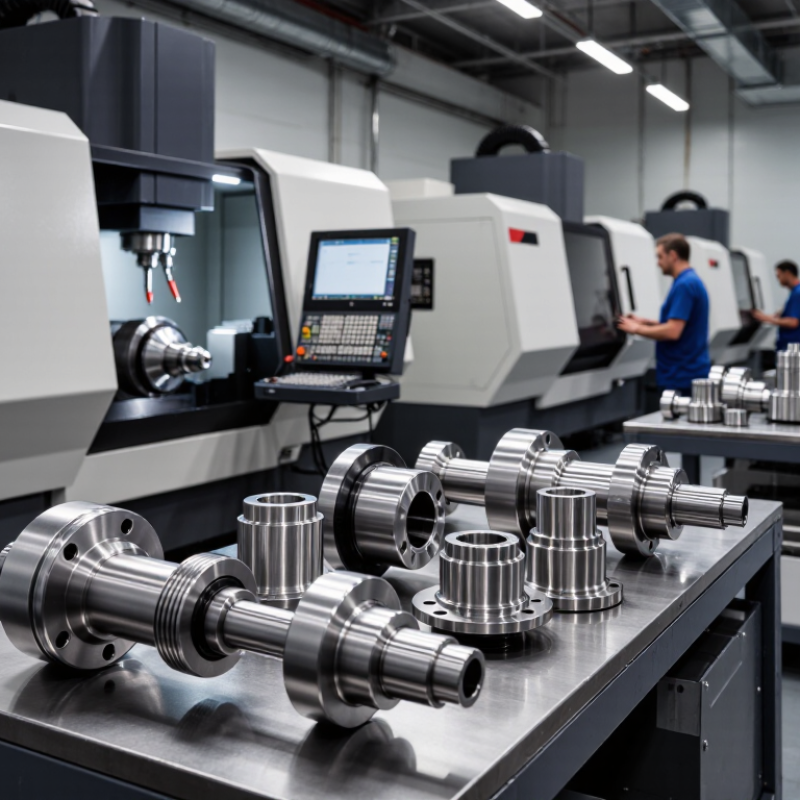
Top Custom CNC Machined Parts Suppliers Worldwide

What Defines a Top Custom CNC Machined Parts Supplier

A top custom CNC machined parts supplier proves capability through repeatable work, not polished promises. Experienced engineers review drawings before cutting metal. They check tolerances, datum structures, threads, and surface requirements. A practical supplier may suggest a small design change when a sharp internal corner raises machining cost. That advice should be clear, measurable, and respectful.

For Custom CNC Milled Aluminum Parts, process control matters at every stage. Skilled operators select suitable cutters, spindle speeds, and workholding methods. Inspection records should identify material grade, batch details, critical dimensions, and final results.

CMM reports, calibrated gauges, and visual checks provide useful evidence. It helps when the supplier shares sample photos, first-article data, and honest production limits.

Communication also defines quality. Drawings should receive a precise review, not a vague approval. Questions about tolerances need answers before production begins. A reliable supplier explains lead times, packaging methods, and possible risks in plain language. Small batches deserve the same attention as large orders. Mistakes can happen. Hiding them is the real warning sign. Even strong suppliers should admit when a tolerance, finish, or delivery target needs reconsideration.

Key Materials and Machining Capabilities to Compare

Choosing top custom CNC machined parts suppliers requires more than comparing hourly rates. Material selection often determines service life, weight, corrosion resistance, and finishing costs. Aluminum suits lightweight housings and Custom Automotive Components, while stainless steel supports harsh environments and repeated cleaning. Titanium offers excellent strength, but its higher cost and slower machining need careful justification.

Ask suppliers how they machine each material. A capable facility should explain its turning, three-axis, four-axis, and five-axis processes clearly. Tight internal features may require live tooling, deep-hole drilling, or electrical discharge machining. Check available tolerances, maximum part sizes, surface finishes, and inspection equipment. Coordinate measuring machines, calibrated gauges, and documented first-article reports provide stronger evidence than general quality claims.

Practical experience matters here. A supplier may quote a perfect tolerance, yet the drawing, tool access, or material condition may make it unstable. Request sample inspection data and review how operators control burrs, warping, and heat buildup. Ask whether prototypes and production runs receive the same process discipline. No comparison is perfect. I have seen inexpensive parts fail because finishing allowances were ignored. A small design review can prevent that mistake. Also examine traceability, packaging methods, and communication during engineering changes. These details often reveal reliability before the first shipment.

Quality Standards, Tolerances, and Inspection Processes

Top Custom CNC Machined Parts Suppliers Worldwide

Reliable CNC suppliers treat quality as a measurable process, not a marketing phrase. During supplier reviews, I look for documented procedures, trained inspectors, and traceable material certificates. ISO 9001 registration can indicate controlled operations, but it does not guarantee perfect parts. The actual evidence remains inspection data, corrective actions, and consistent production records.

Tolerances should match the part’s function. Holding ±0.01 mm across every feature may increase cost without improving performance. A capable supplier explains this trade-off before machining begins. Technical drawings should define datums, geometric tolerances, surface finishes, and critical dimensions clearly. ASME Y14.5 or equivalent practices help reduce interpretation errors between international engineering teams.

Inspection usually begins with calibrated micrometers, height gauges, and pin gauges. Complex profiles may require a coordinate measuring machine or optical inspection system. Inspectors should record temperature, equipment identification, measured values, and operator details. First-article inspection is useful for confirming the process before larger quantities proceed. Statistical sampling can support stable production, but it cannot replace full inspection of safety-critical features.

I have seen excellent-looking parts fail because burrs were ignored. Small details matter. Suppliers should also verify threads, flatness, concentricity, and surface roughness when specified. Photographs help, but they are not proof of dimensional accuracy. One weakness remains common: inspection reports sometimes list results without showing the measurement method. That gap deserves questioning.

Industry Applications for Custom CNC Machined Components

Custom CNC machined components support demanding industries where fit, repeatability, and traceability matter. In aerospace tooling, milled aluminum brackets and titanium housings must hold tight tolerances around drilled mounting points. A small positional error can shift an entire assembly. Medical equipment uses stainless steel collars, surgical instrument fixtures, and low-volume prototypes with controlled surface finishes. Custom Stainless Steel Turned Components suit shafts, threaded adapters, and sensor sleeves. Their value appears at the interface: smooth threads, stable diameters, and clean edges reduce assembly friction. From practical manufacturing experience, drawings alone are not enough. Material certificates, inspection reports, and process notes show whether a supplier can repeat the result.

Automotive programs often need prototype brackets before production tooling receives approval. CNC machining lets engineers test airflow guides, gearbox spacers, and battery enclosure fittings quickly. In robotics, compact couplings and hardened pins face repeated motion, vibration, and occasional impact. Surface treatment selection matters. It is sometimes treated as an afterthought. That can create avoidable wear. Energy equipment presents another challenge, as valve bodies and pump parts may face heat, pressure, or corrosive fluids. Suppliers should connect machining parameters with service conditions, not only quote a low price. Attractive samples can still fail when burr removal is inconsistent. Application feedback must return to the drawing. Inspection plans should include critical dimensions, thread gauges, and functional checks on representative parts.

Material selection is a major consideration when sourcing custom CNC machined components worldwide. Aluminum 6061-T6 is widely used for lightweight aerospace, automotive, and electronics parts, while stainless steel 304, brass C360, titanium Grade 5, and unfilled PEEK support corrosion-resistant, high-strength, electrical, medical, and low-friction applications. Density values are nominal engineering values commonly published in material datasheets.

How to Evaluate Pricing, Lead Times, and Production Capacity

Top Custom CNC Machined Parts Suppliers Worldwide

How to Evaluate Pricing, Lead Times, and Production Capacity

When comparing custom CNC machined parts suppliers worldwide, pricing is only the visible number. Ask what it includes. A reliable quotation should separate material, programming, machining, finishing, inspection, packaging, and shipping. Request the price basis, such as one prototype or 500 production parts. I have seen low quotes change after drawings were reviewed. That is not always dishonest, but it reveals weak assumptions. Compare identical tolerances and surface requirements. Otherwise, the cheapest offer may simply omit necessary work.

Evaluate lead time from purchase order to approved shipment, not from the first email. Ask for a sample schedule covering design review, first article inspection, production, and final inspection. Suppliers should explain their normal and peak capacity. A workshop with many machines may still lack skilled operators or inspection equipment. Request recent evidence, such as anonymized inspection reports and realistic monthly output. Also ask how they handle urgent revisions. Promises are easy. Controlled processes matter more. I would leave a small buffer because engineering changes and material delays happen.

Tips: Use the same drawing package for every quote. Confirm tolerance capability with measured data. Ask whether capacity is reserved or merely estimated. Check communication during a small trial order. Record quoted price, lead time, capacity, and exclusions in one comparison sheet. Revisit it after delivery; your assumptions may be wrong.

Top Custom CNC Machined Parts Suppliers Worldwide - How to Evaluate Pricing, Lead Times, and Production Capacity
Anonymous supplier benchmarks for comparing custom CNC machining capabilities, commercial terms, quality systems, and production readiness worldwide.
Supplier Category Typical Order Volume Indicative Price Range per Part Prototype Lead Time Production Lead Time Common Materials Typical Tolerance Monthly CNC Capacity Quality and Inspection Best-Fit Applications Evaluation Considerations
Local Prototype Job Shop 1–25 parts US$80–US$600 for simple to moderately complex parts 3–10 business days 2–5 weeks Aluminum, stainless steel, brass, engineering plastics Typically ±0.ส่วน1 mm; tighter tolerances available by quotation 100–2,000 parts Dimensional inspection, material certificates on request, basic inspection report Functional prototypes, design verification, low-volume replacement parts Usually offers fast communication and engineering feedback, but unit prices may rise sharply for repeat production.
Digital Manufacturing Network 1–1,000 parts US$25–US$450 per part, depending on material, geometry, and quantity 3–8 business days 1–4 weeks Aluminum, steel, stainless steel, titanium, copper alloys, plastics Commonly ±0.1 mm; tolerance depends on feature size and process 2,000–20,000 parts through distributed capacity Automated quoting, inspection options, certificates available for selected orders Rapid iteration, engineering samples, short-run production Compare the actual manufacturing location, inspection scope, shipping terms, and consistency between production batches.
Export-Oriented Contract Manufacturer 50–10,000 parts US$8–US$180 per part at production quantities 7–15 business days 3–8 weeks Aluminum, carbon steel, stainless steel, tool steel, brass, plastics Typically ±0.05–0.1 mm for standard features 5,000–100,000 parts Usually supports first-article inspection, process inspection, and material traceability Cost-sensitive production, industrial equipment, commercial hardware Verify capacity reservations, process controls, packaging standards, export documentation, and total landed cost.
High-Precision CNC Specialist 5–2,000 parts US$120–US$2,500 per part for tight-tolerance or complex components 10–20 business days 4–10 weeks Titanium, nickel alloys, hardened steels, stainless steel, aluminum Approximately ±0.01–0.025 mm on controlled features 500–10,000 parts CMM inspection, controlled measurement records, material and process certificates often available Aerospace, medical, semiconductor, optical, and high-performance equipment parts Request a capability study, measurement method, calibration records, and a clear definition of critical characteristics.
High-Volume Production Facility 5,000–1,000,000+ parts US$0.80–US$45 per part, depending on complexity and annual volume 15–30 business days 6–16 weeks Aluminum, steel, stainless steel, brass, copper, engineering plastics Typically ±0.025–0.1 mm for production features 50,000–1,000,000+ parts Production control plans, statistical process control, first-article approval, and batch traceability Automotive, consumer products, automation equipment, and repeat industrial programs Evaluate tooling or fixture investment, minimum order quantity, changeover time, safety stock, and capacity commitments.
Prototype-to-Production Partner 1–50,000 parts US$15–US$900 per part across prototype and production stages 5–12 business days 4–12 weeks Aluminum, stainless steel, mild steel, brass, titanium, plastics Typically ±0.05–0.1 mm; tighter tolerances require technical review 3,000–75,000 parts Design-for-manufacturing review, first-article inspection, CMM or gauge inspection where required Start-ups, new product introduction, and programs progressing from samples to recurring orders Check whether the same process, material source, inspection method, and approved supplier chain will be retained after scale-up.
Specialized Multi-Axis Machining Supplier 5–5,000 parts US$100–US$1,800 per part for complex multi-face components 10–25 business days 5–12 weeks Titanium, aluminum, stainless steel, nickel alloys, hardened steels Typically ±0.02–0.05 mm on qualified features 1,000–15,000 parts Multi-axis process validation, CMM reports, surface-finish measurement, and traceability options Impellers, housings, structural components, medical instruments, and complex aerospace parts Confirm machine envelope, spindle capability, workholding strategy, collision control, and simultaneous multi-axis experience.
Integrated Machining and Finishing Supplier 25–25,000 parts US$20–US$700 per part including selected secondary processes 8–18 business days 4–10 weeks Aluminum, stainless steel, steel, brass, copper, engineering plastics Typically ±0.05–0.1 mm before finishing; dimensional change must be reviewed 3,000–60,000 parts Dimensional inspection, coating or plating certificates, final inspection reports, and batch records Finished assemblies, enclosures, brackets, fluid components, and appearance-sensitive parts Separate machining tolerances from coating tolerances and verify subcontractor control, finish thickness, color, and corrosion requirements.
Benchmark note: Price, lead time, and capacity figures are indicative worldwide market ranges for anonymous supplier categories, not quotations from specific companies. Actual results vary with material cost, part size, geometric complexity, tolerance, surface finish, inspection requirements, order quantity, shipping method, and production schedule. The tolerance figures should be confirmed against the supplier’s documented capability and the drawing’s stated standards.

Global Supplier Selection and Communication Considerations

Top Custom Cnc Machined Parts Suppliers Worldwide

Global supplier selection involves more than comparing prices. A reliable supplier should explain tolerances, material grades, surface finishes, and inspection methods clearly. Ask for sample inspection reports and material certificates before approving production. These documents reveal whether the supplier understands precision manufacturing or simply promises fast delivery.

Communication can decide the success of a Cnc Machined Parts project. Share complete drawings, three-dimensional files, revision numbers, and critical dimensions. Use one controlled document system to prevent outdated instructions. Time-zone differences matter. A clear response schedule reduces delays during technical reviews. Suppliers should also confirm export documents, packaging requirements, and applicable safety standards for the destination market.

Experience teaches uncomfortable lessons. Our earlier assumption that a lower quote meant efficiency caused hidden rework costs. It was not efficient. A polished website can also conceal weak process control. Request a video tour, production photographs, or a small trial order when possible. Evaluate how engineers handle unclear tolerances and design changes. Honest questions are valuable. A dependable supplier admits limitations, records corrective actions, and provides realistic lead times instead of pleasing estimates. Communication should remain respectful, written, and specific throughout sampling, machining, inspection, and shipment.

China CNC Machining Milling Parts: Market Insights from Grand View Research and Fortune Business Insights Reports

China’s CNC machining milling parts market is developing alongside growing demand for precision, customization, and shorter delivery cycles. Industry research indicates that manufacturers increasingly require complex components with tight tolerances for automotive, industrial automation, electronics, aerospace, and other advanced applications. China’s mature supply chain, skilled engineering workforce, and improving production technologies allow suppliers to support both prototype development and large-scale OEM manufacturing.

A capable CNC milling partner should provide more than machining capacity. FRIMA manufacturer develops OEM products according to customer drawings, specifications, and application requirements, offering support from material selection and process planning to production and inspection. Advanced multi-axis equipment, efficient programming, and strict quality controls help produce consistent parts in aluminum, stainless steel, brass, engineering plastics, and other commonly used materials.

For customers seeking dependable China CNC machining milling parts, a certified management system can provide additional confidence. Manufacturing operations guided by IATF 16949 and ISO 9001 principles emphasize process stability, traceability, inspection discipline, and continuous improvement. Supported by experienced manufacturing specialists and industry professionals, the supplier can respond to demanding schedules while maintaining dimensional accuracy, surface quality, and repeatable performance across different production volumes.

FAQS

How should I compare custom CNC machining suppliers?

Compare materials, machining methods, tolerances, inspection tools, pricing, lead times, and communication. Hourly rates alone mislead. Use identical drawings for every quotation.

Which materials are suitable for different parts?

Aluminum works well for lightweight housings and vehicle components. Stainless steel suits harsh environments and repeated cleaning. Titanium provides high strength, but machining takes longer and costs more. The expensive option is not always necessary.

What machining capabilities should a supplier explain?

Ask about turning, three-axis, four-axis, and five-axis machining. Tight internal features may need live tooling or deep-hole drilling. Electrical discharge machining can support difficult details. Request maximum part sizes and achievable tolerances.

How can I verify quality claims?

Request inspection reports, material certificates, and first-article data. Check whether the facility uses calibrated gauges and coordinate measuring machines. Ask how operators control burrs, warping, and heat buildup. General promises are weak evidence.

What should a CNC quotation include?

The quotation should separate material, programming, machining, finishing, inspection, packaging, and shipping. Confirm whether the price covers one prototype or 500 production parts. Low quotes may exclude finishing allowances or inspection work.

How should I evaluate production lead times?

Measure lead time from purchase order to approved shipment. Ask for a schedule covering design review, sample inspection, production, and final inspection. Include a small buffer for material delays and engineering changes. Delays happen.

How can I check real production capacity?

Ask about normal capacity, peak capacity, skilled operators, and inspection availability. Request anonymized inspection reports and realistic monthly output. A workshop may have many machines but limited process control. Capacity claims need evidence.

What communication practices reduce manufacturing mistakes?

Share complete drawings, three-dimensional files, revision numbers, and critical dimensions. Use one controlled document system. Agree on response times across time zones. Written details prevent outdated instructions from reaching production.

What warning signs should I watch for?

Be cautious when a supplier avoids tolerance questions or offers unrealistic delivery promises. Request a video tour, production photos, or a small trial order. A dependable supplier admits limitations and records corrective actions. My earlier low-quote assumption was wrong.

Conclusion

Choosing the right supplier for Custom CNC Machined Parts requires more than comparing basic prices. A top supplier should demonstrate strong engineering expertise, advanced machining capabilities, and the ability to work with materials such as aluminum, stainless steel, titanium, brass, engineering plastics, and specialty alloys. Buyers should also review dimensional tolerances, quality standards, inspection equipment, traceability procedures, and consistency across prototype and production runs. These factors are especially important for components used in industries such as aerospace, automotive, medical equipment, electronics, robotics, and industrial machinery.

A complete supplier evaluation should include pricing transparency, tooling and setup costs, lead times, production capacity, minimum order requirements, and scalability. Clear communication is equally important when working across different regions, languages, time zones, and technical documentation standards. By assessing technical capability, quality control, delivery reliability, communication efficiency, and long-term production support, companies can select a global manufacturing partner that delivers dependable parts, stable performance, and better overall value.
Ethan

Ethan

Ethan is a dedicated marketing professional at FRIMA, known for his unwavering commitment to delivering high-quality products to clients and their customers. His extensive knowledge of the company's offerings allows him to effectively communicate the unique advantages of their products. Ethan......
Previous How to Choose a Precision Machining Supplier?
Call Us Email Us