News News
Explore the latest updates from FRIMA precision CNC machining business, alongside in-depth insights into global manufacturing trends and industry advancements.
Upload Your Drawings
Get a Quote
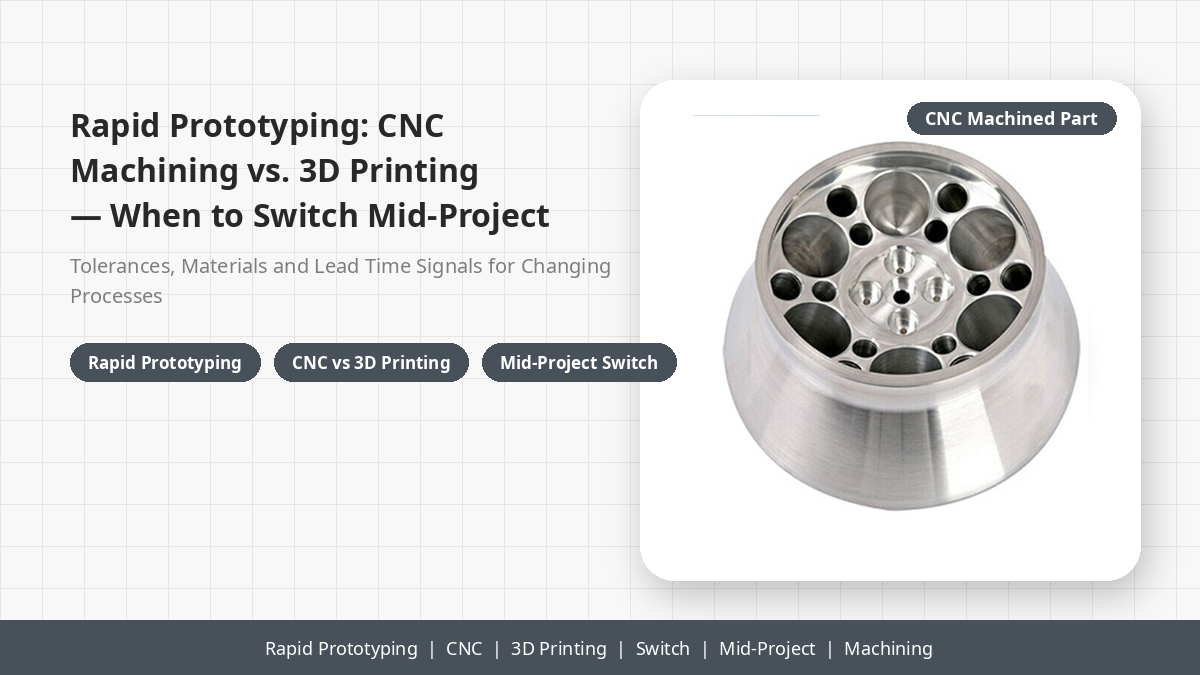
Rapid Prototyping: CNC Machining vs. 3D Printing — When to Switch Mid-Project
2026-09-24
The right rapid-prototyping process at the start of a project is almost never the right process at the end. 3D printing is the right answer when the engineer needs the part on the desk in days; CNC machining is the right answer when the project needs the pro...
view
detail

FRIMA Mid-Autumn Festival Greetings & CNC Machining Schedule Notice
2026-09-23
Autumn brings pleasant breezes and a bright full moon. The annual Mid-Autumn Festival in China is approaching. FRIMA extends sincere festive greetings and best wishes to all our global new and existing customers, partners, employees and their families.
view
detail

From Prototype to PPAP: How CNC Machining for Automotive Parts Evolves Across Volume Tiers
2026-09-22
TL;DR — Process-Engineer Takeaways
Prototype, pilot, and serial production are three different CNC processes, not the same process at three quantities — fixture strategy, tooling combination, cutting-parameter window, and metrology c...
view
detail
CNC Surface Finish Chart: Ra Values, Process Mapping, and Cost Impact (2026)
2026-09-21
TL;DR
Surface roughness (Ra) is measured in micrometers (µm) or microinches (µin); lower Ra means a smoother — and usually more expensive — surface.
The 2026 chart spans from Ra 0.05 µm (mirror polish) up to Ra 12.5 µ...
view
detail
CNC Machining Tolerances Explained: ISO 2768, ±0.005mm, and What Your Drawing Should Actually Say
2026-09-18
Every CNC machining inquiry that comes into a machine shop contains the same recurring problem at the tolerance specification line: a drawing that either specifies tolerances so tight they inflate the manufacturing cost fivefold, or tolerances so vague t...
view
detail
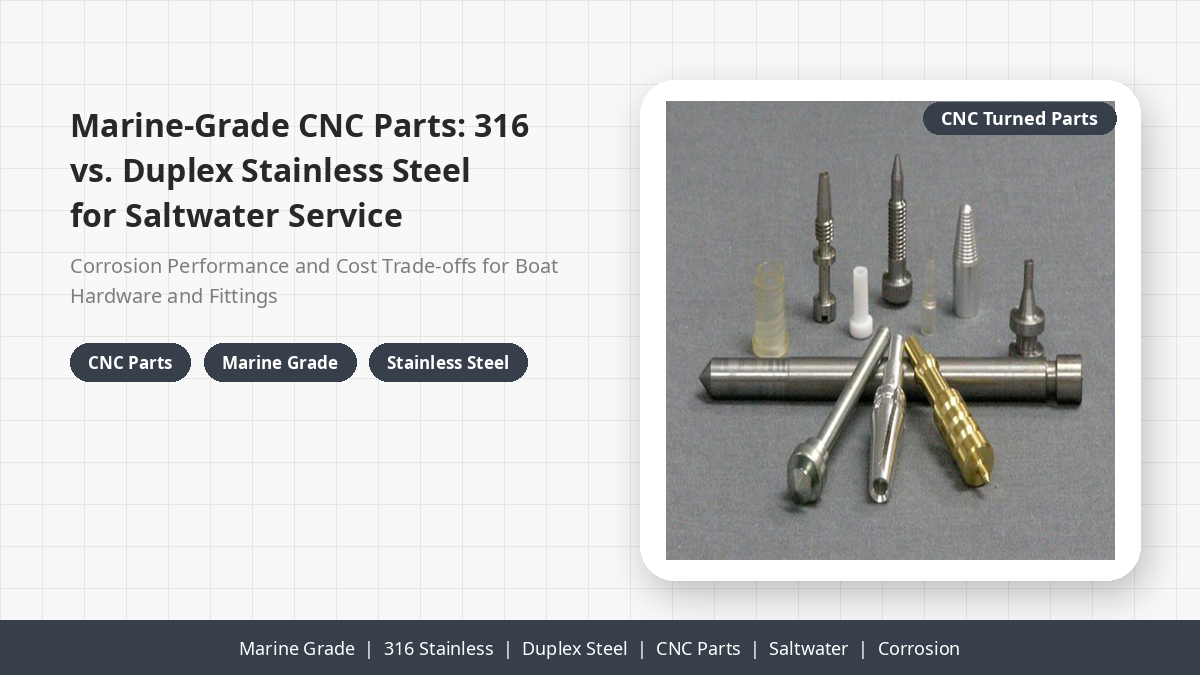
Marine-Grade CNC Parts: 316 vs. Duplex Stainless Steel for Saltwater Service
2026-09-16
For marine applications, the choice between 316 stainless steel and duplex stainless steel is one of the most consequential decisions in the CNC parts procurement chain. Both alloys resist saltwater corrosion — but they resist it at different levels,...
view
detail
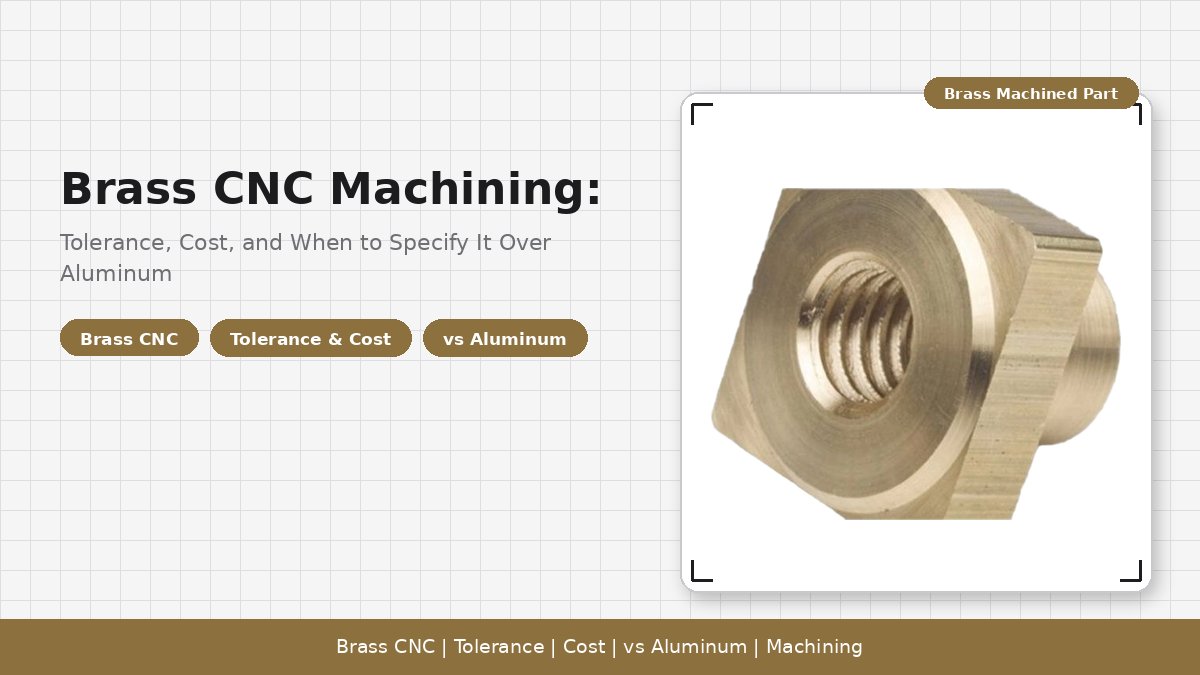
Brass CNC Machining: Tolerance, Cost, and When to Specify It Over Aluminum
2026-09-14
TL;DR
Brass and aluminum are both CNC-turnable, both widely stocked, and both run on the same lathes — but they are not interchangeable, and the design choice between them is rarely a budget question. Brass (the C360 / C260 / C464 family) machines...
view
detail
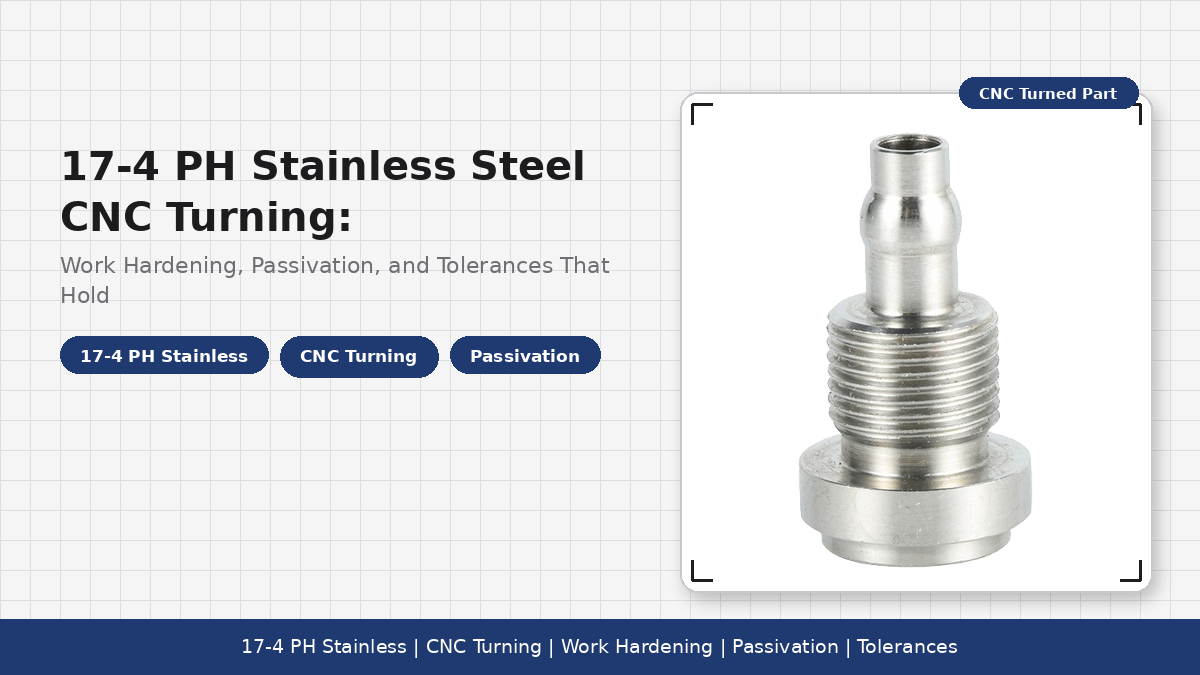
17-4 PH Stainless Steel CNC Turning: Work Hardening, Passivation, and Tolerances That Hold
2026-09-11
TL;DR — 17-4 PH Stainless Steel CNC Turning at a Glance
17-4 PH is unforgiving — name the wrong aging condition and the part misses strength, run the cut below the work-hardened layer and the tool burns, skip passivation and the corrosio...
view
detail
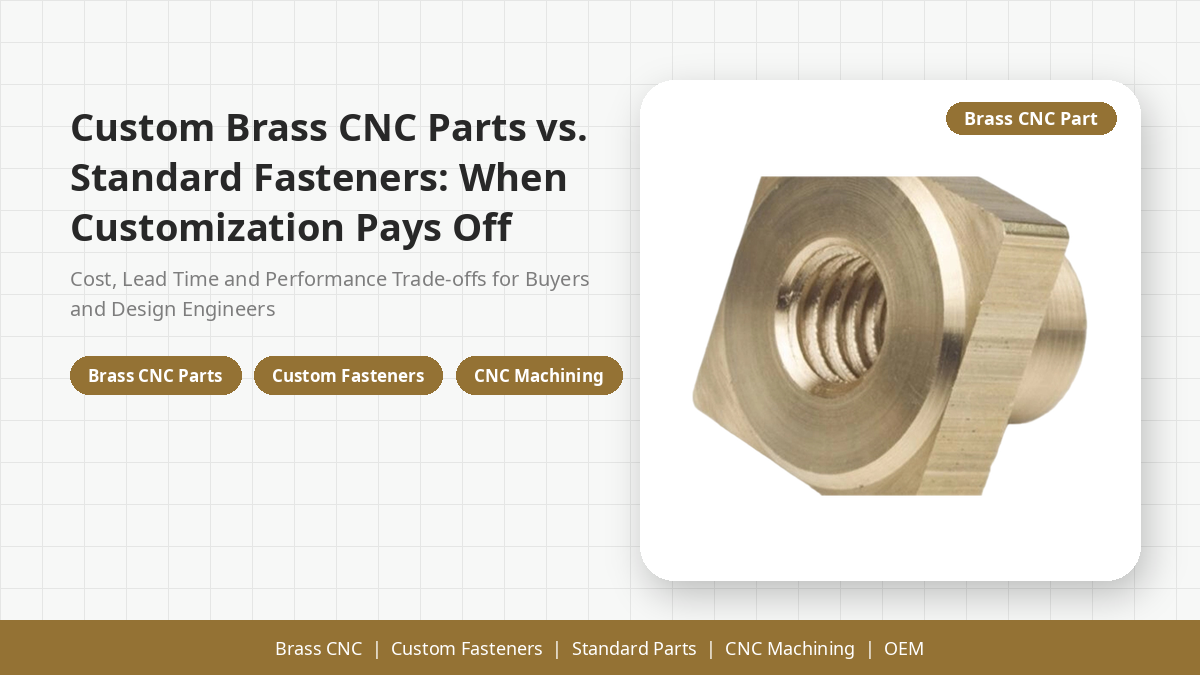
Custom Brass CNC Parts vs. Standard Fasteners: When Customization Pays Off
2026-09-09
A buyer's reference on the decision that quietly decides whether an engineering program lands well or lands expensively — whether to use a catalog fastener or to specify a custom brass CNC part. The honest answer is that custom does not automatical...
view
detail

REACH & RoHS Compliance for CNC Parts Shipped to the EU: A Supplier Audit Checklist
2026-09-07
A practical way to separate legal scope from paperwork, then verify the material, surface treatment, testing, and change-control evidence behind every shipment.
view
detail

Common Electroplating Defects and Solutions
2026-09-05
FRIMA share 8 common electroplating defects including burning, peeling, burrs and so on, analyzes their causes, provides end-to-end solutions and offer one-stop CNC turning and milling services.
view
detail
Carbon Footprint of CNC Machined Parts: Aluminum vs. Steel, and What ESG Buyers Ask
2026-09-04
Aluminum has higher embodied carbon per kg than steel (8-12 vs 1.8-2.5 kg CO2e/kg), but the per-functional-unit comparison depends on the part design — steel parts designed thinner or smaller can win on total carbon.
view
detail